
|
 • Home/Overview • Checklists • Database • Fieldwork • Phylogeography • Photo Gallery • Species pages • Endangered beetles • Personnel • Informatics • Collaborators • Collection • Bibliography • Support the project • Beetle links  | California Beetle Project > Species Pages > Xylophilus constrictus Classification Scientific name: Xylophilus constrictus Horn Images (click to enlarge) 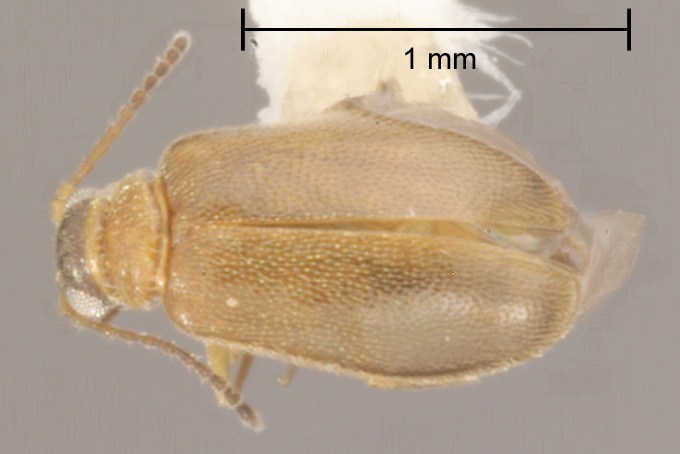 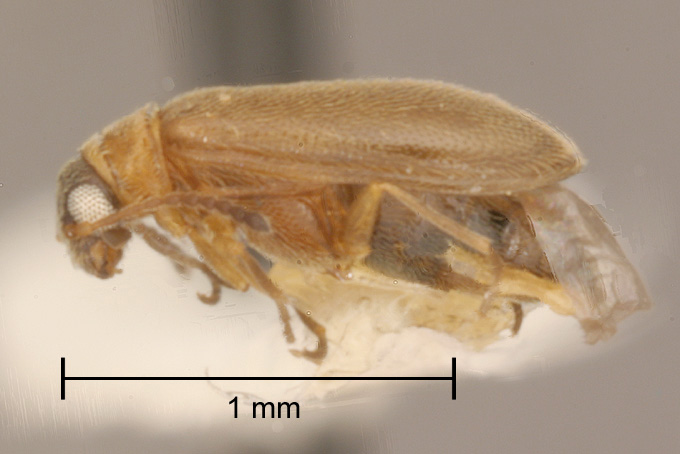 What it looks like: 1.5-2.2mm in length. This beetle is light brown to black, with short pubescence all over. The prothorax is narrower than the wing covers, and has deep grooves along its front and back edges. The head is slightly wider, with large eyes and long antennae. Where you'll find it: This species is found throughout much of southwestern North America, particularly mountainous parts of California. Natural History: Very little is known about the natural history of this rare species. It has been beaten from pine trees when the pollen producing cones have begun to decompose (late spring to early summer. However, it has also been attracted to blacklight in areas where pines were absent (such as Carrizo Plain). This page was written by Michael Caterino, project PI. |