
|
 • Home/Overview • Checklists • Database • Fieldwork • Phylogeography • Photo Gallery • Species pages • Endangered beetles • Personnel • Informatics • Collaborators • Collection • Bibliography • Support the project • Beetle links  | California Beetle Project > Species Pages > Sphaeridium scarabaeoides Classification Scientific name: Sphaeridium scarabaeoides (Linnaeus) Images (click to enlarge) 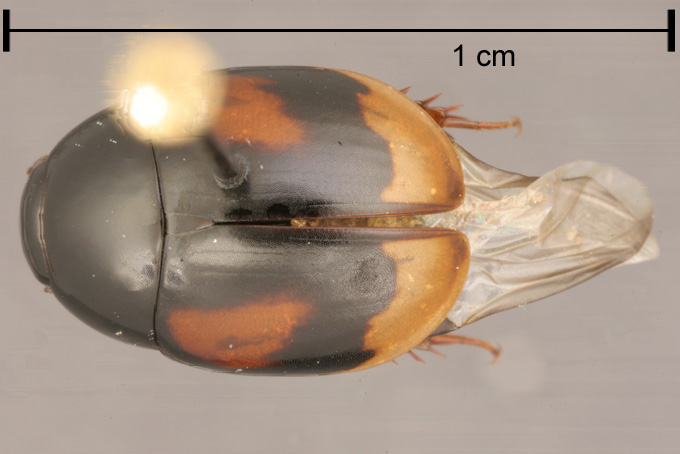 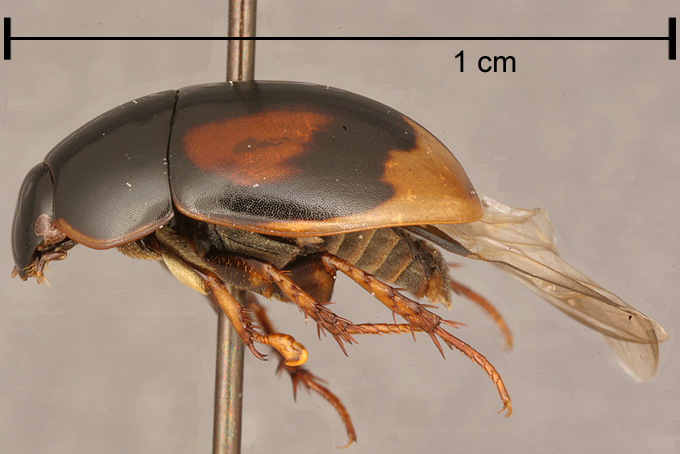 What it looks like: 4.0-7.1 mm in length. Its body is robust and oval-shaped. It is a dark brown, almost black, color with two large reddish-brown spots on the elytra. The tips of the elytra are light brown. The antennae are very short and clubbed while the legs are long and light brown. Where you'll find it: This species was first described by Linnaeus in Europe around the mid-18th century. It was accidentally introduced into North America from Europe very early on. By the late 19th century it was established in Montreal, Canada. In 1913 it was found in Washington state and in 1975 it was recorded in Mexico City. Its range currently covers all of Europe and North America. Natural History: This beetle is generally found in fresh dung, particularly that of cows and horses. This page was written by Maren Farnum, a 2005 California Beetle Project intern. |