Santa Barbara Museum of Natural History

NOTE: As of 2014, the California Beetle Project page is no longer updated. The original database and list of California beetles in the menu on the left will remain for the time being, but the information contained within is not necessarily current. SBMNH Entomology Curator Matthew L. Gimmel has divided up the function of the original database into two conceptual halves:

  1. The SBMNH Entomology specimen-level database, including all SBMNH beetle specimens included in the CBP database, which is now available (and ever-growing) through the ecdysis portal at https://serv.biokic.asu.edu/ecdysis/

  2. A literature- (and available specimen-)based checklist.
  3. of the Coleoptera of California, which is being revised and re-compiled by Dr. Gimmel, and, as of January 2017, is about 85% complete.


    • Home/Overview
    • Checklists
    • Database
    • Fieldwork
    • Phylogeography
    • Photo Gallery
    • Species pages
    • Endangered beetles
    • Personnel
    • Informatics
    • Collaborators
    • Collection
    • Bibliography
    • Support the project
    • Beetle links


Funded in part by award DEB0447694 from the National Science Foundation to M. Caterino.


Last updated 01/16/2009

 California Beetle Project > Species Pages > Lebia vittata

Classification

Scientific name: Lebia vittata Fabricius
    Order Coleoptera
    Superfamily Caraboidea
    Family Carabidae

Images (click to enlarge)

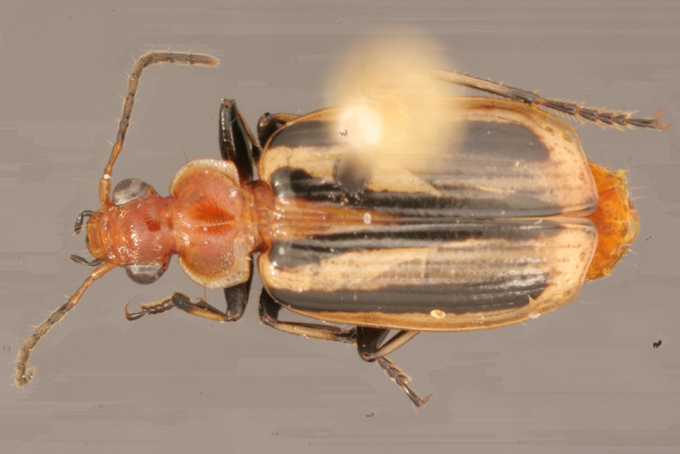
What it looks like: This species averages 5mm in length. The head is orange with distinct lines on the frons (the lower part of the head). It has an orange pronotum. The antennae are usually dark with few hairs but become paler towards their tips. The elytra are yellow with dark longitudinal lines, and the ridge at their base is complete.

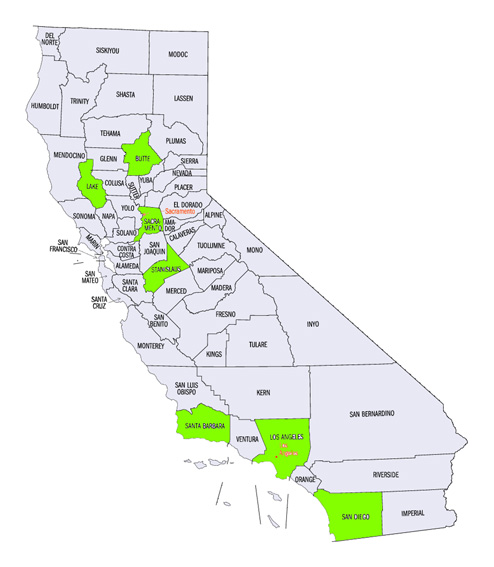
Where you'll find it: This species has been found throughout the United States and southern Canada.

Natural History: Nothing is known of this species' natural history.

This page was written by Beatriz Alvarez, a 2005 participant in the Quasars to Sea Stars teen program.


© 2026 Santa Barbara Museum of Natural History