
|
 • Home/Overview • Checklists • Database • Fieldwork • Phylogeography • Photo Gallery • Species pages • Endangered beetles • Personnel • Informatics • Collaborators • Collection • Bibliography • Support the project • Beetle links  | California Beetle Project > Species Pages > Hippodamia convergens Classification Scientific name: Hippodamia convergens Guérin-Méneville Images (click to enlarge) 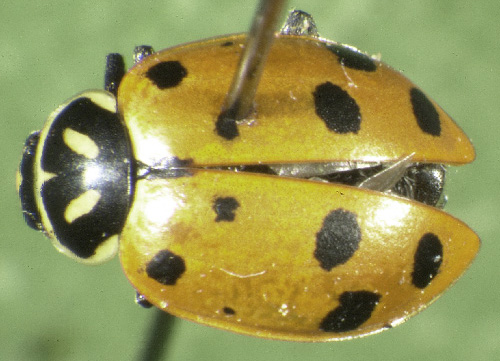 What it looks like: 4.2-7.3 mm in length. It's body is robust and ovoid, with distinctive bright red elytra covering the entire abdomen. The elytra have symmetrical black spots unique to each individual, varying from barely visible specks to fully developed patterns of obvious marks. The beetle's name, however, is not derived from the colorings of the elytra, but rather from two pale converging spots appearing on its black pronotum. Where you'll find it: These beetles are common throughout the United States and central Canada. Natural History: Convergent lady beetles generally live on plants such as wheat, sorghum, alfalfa, fruit, and vegetables. They serve a great benefit to farmers and gardeners because their primary diet consists of aphids, a small pest that can ruin the valuable crops. They have the ability to adjust their lifecycles according to aphid availability and can hibernate for up to 9 months if need be. Enormous overwintering aggregations of H. convergens can often be found in mountain canyons. This page was written by Maren Farnum, a 2005 California Beetle Project intern. |