
|
 • Home/Overview • Checklists • Database • Fieldwork • Phylogeography • Photo Gallery • Species pages • Endangered beetles • Personnel • Informatics • Collaborators • Collection • Bibliography • Support the project • Beetle links  | California Beetle Project > Species Pages > Brachinus favicollis Classification Scientific name: Brachinus favicollis Erwin Images (click to enlarge) 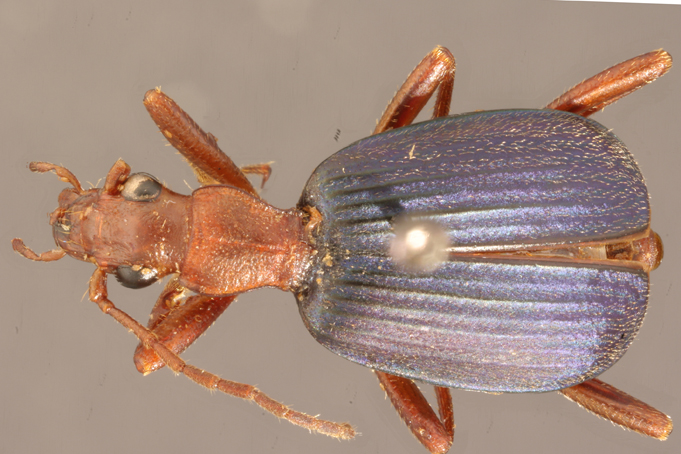 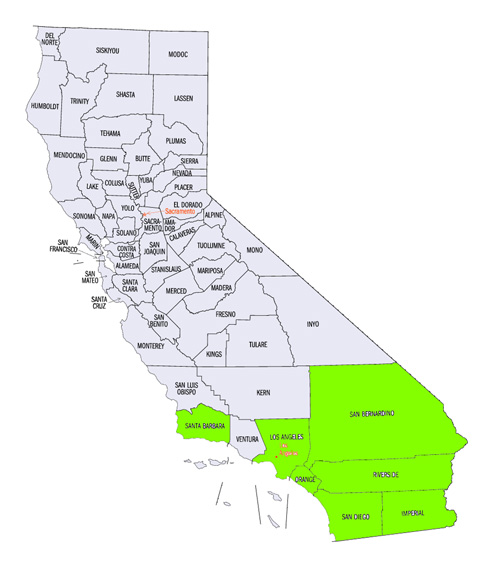 What it looks like: 9.5-10.5 mm in length. 4.5-4.8 mm in width. Wing-covers blue with highly defined ridges and with entire dorsal surface having dense hair. Head, pronotum (dorsal part of the thorax), and abdominal segments brown to reddish brown. Pronotum rugose and pitted. Where you'll find it: Deserts and dry mountains of southern California, northern Baja California, and eastern Arizona. Natural History: Much in regard to the lifestyle of B. favicollis is unknown or unverified. B. pallidus, which is very similar to B. favicollis, has been studied more rigorously. Because of their likeness, we can assume that B. favicollis has a lifestyle similar to that of B. pallidus in that it is a generalist predator and scavenger. It also can be assumed to be a parasite of the pupae of streamside insects in its larval stage, but the species of insects that it has a parasitic relationship with is not known. This species occupies very diverse habitats and can be difficult to find. It is usually found in rocky, streamside areas, but is able to thrive in both wet and dry places. This page was written by David Honsberger, a 2005 participant in the Quasars to Sea Stars teen program. |