Santa Barbara Museum of Natural History

NOTE: As of 2014, the California Beetle Project page is no longer updated. The original database and list of California beetles in the menu on the left will remain for the time being, but the information contained within is not necessarily current. SBMNH Entomology Curator Matthew L. Gimmel has divided up the function of the original database into two conceptual halves:

  1. The SBMNH Entomology specimen-level database, including all SBMNH beetle specimens included in the CBP database, which is now available (and ever-growing) through the ecdysis portal at https://serv.biokic.asu.edu/ecdysis/

  2. A literature- (and available specimen-)based checklist.
  3. of the Coleoptera of California, which is being revised and re-compiled by Dr. Gimmel, and, as of January 2017, is about 85% complete.


    • Home/Overview
    • Checklists
    • Database
    • Fieldwork
    • Phylogeography
    • Photo Gallery
    • Species pages
    • Endangered beetles
    • Personnel
    • Informatics
    • Collaborators
    • Collection
    • Bibliography
    • Support the project
    • Beetle links


Funded in part by award DEB0447694 from the National Science Foundation to M. Caterino.


Last updated 01/16/2009

 California Beetle Project > Species Pages > Agyrtes longulus

Classification

Scientific name: Agyrtes longulus (LeConte)
    Order Coleoptera
    Superfamily Staphylinoidea
    Family Agrytidae

Images (click to enlarge)

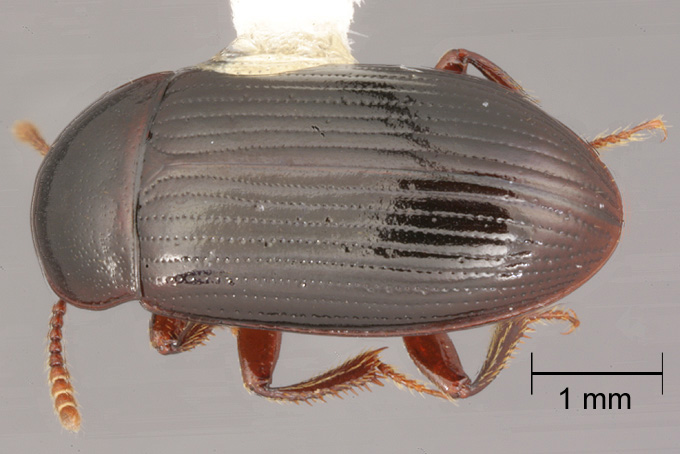
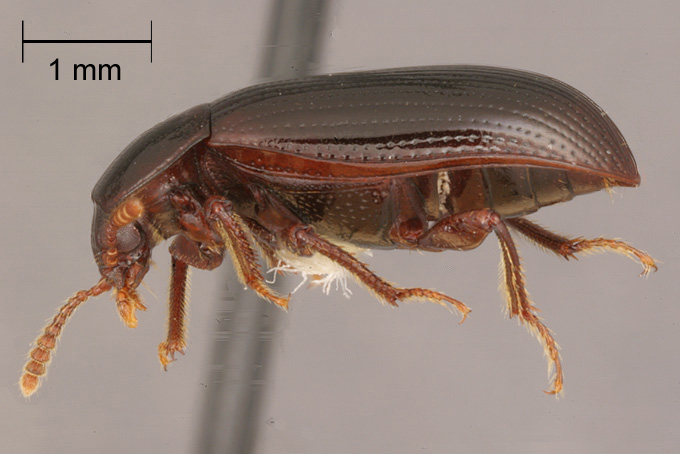
What it looks like: 5-7 mm in length. Its body is elongate and dark reddish-brown. The elytra have striae (shallow punctures formed in rows) and there are distinct depressions right behind the shoulders. The head points directly downward.

Where you'll find it: They can be found in coastal regions from the Alaskan panhandle down to southern California.

Natural History: These beetles are active in the winter months and well-adapted for cold. They can be found near snow or in other moist environments, such as high mountain creeks. They're sometimes found under the bark of dead trees, including oak, Engelmann spruce, and western larch.

This page was written by Maren Farnum, a 2005 California Beetle Project intern.


© 2026 Santa Barbara Museum of Natural History