
|
 • Home/Overview • Checklists • Database • Fieldwork • Phylogeography • Photo Gallery • Species pages • Endangered beetles • Personnel • Informatics • Collaborators • Collection • Bibliography • Support the project • Beetle links  | California Beetle Project > Species Pages > Agabus disintegratus Classification Scientific name: Agabus disintegratus (Crotch) Images (click to enlarge) 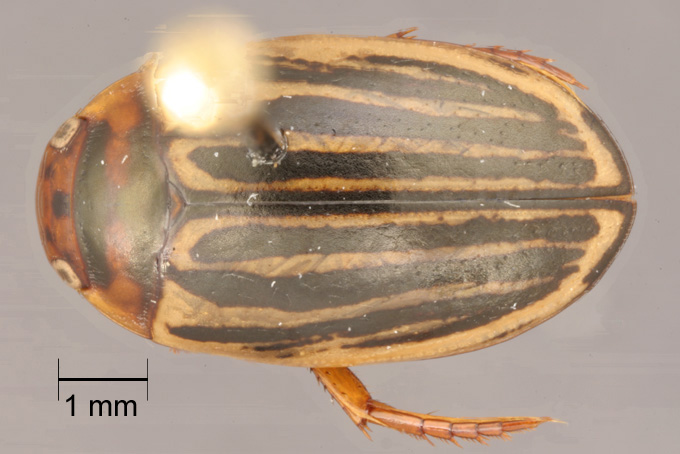 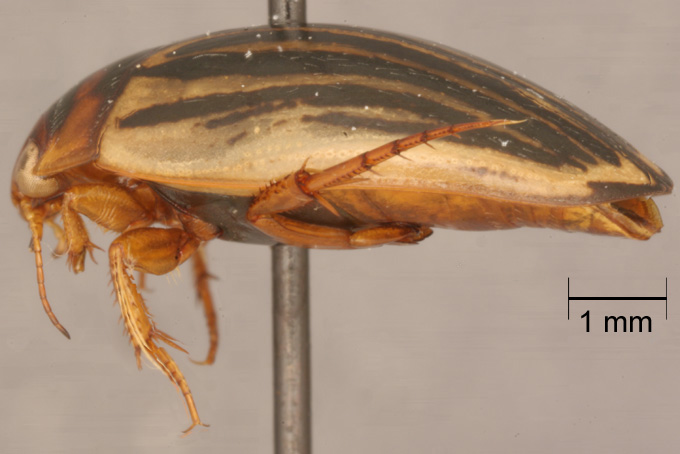 What it looks like: 6.3-8.0 mm in length. Its body is robust and oval-shaped. Its head and shoulders are reddish to dark-brown. The elytra can best be described as "striped", with alternating, elongate, dark brown and light tan stripes. It has orange-brown slender antennae and strong, muscular legs. Where you'll find it: These water beetles can be found across the United States and in southern Ontario. Natural History: This species occurs in seasonal ponds in open areas. They go into diapause, or temporary hibernation, while the ponds are dry (typically during the summer). During the fall and spring, when these ponds fill, they lay their eggs. The larvae are voracious predators, developing to adulthood in a relatively rapid couple of months. This page was written by Maren Farnum, a 2005 California Beetle Project intern. |