
|
 • Home/Overview • Checklists • Database • Fieldwork • Phylogeography • Photo Gallery • Species pages • Endangered beetles • Personnel • Informatics • Collaborators • Collection • Bibliography • Support the project • Beetle links  | California Beetle Project > Species Pages > Acilius abbreviatus Classification Scientific name: Acilius abbreviatus Mannerheim Images (click to enlarge) 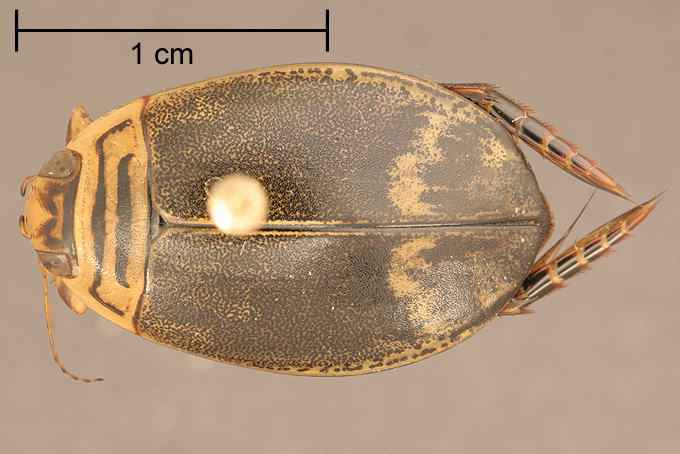 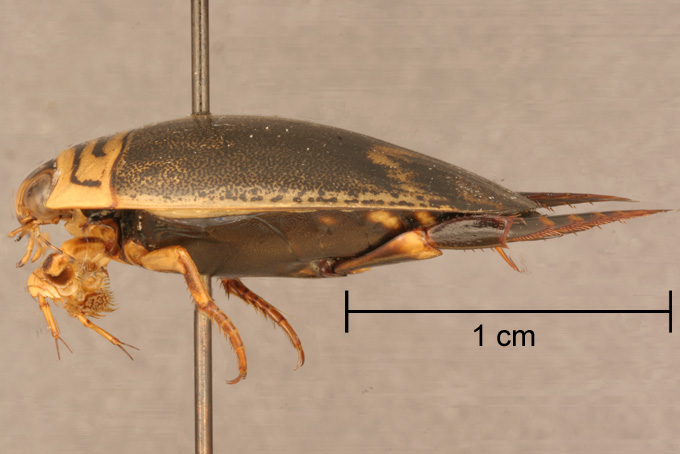 What it looks like: 12.5-15.5mm in length. This beetle can be easily identified by its distinctive markings. Its body is brown with pale marks on the elytra, close to the tip of the abdomen. Its head is pale with transverse brown markings. It is ovoid and streamlined, with long, powerful hind legs for swimming. The elytra of males and females are surprisingly different, those of the females appearing scalloped, with long, scooped out impressions. Where you'll find it: This species ranges from Alaska to southern California and as far east as the Rocky Mountains. In California it is mainly found in cooler, northern areas. Natural History: These beetles are strong swimmers mainly found sculling in the open waters of beaver ponds. They have also been found in vernal pools in the Santa Barbara area. This page was written by Maren Farnum, a 2005 California Beetle Project intern. |